Re-discovering Holly Hill Woodland with people living with disabilities to understand what access means within wilder landscapes
June - November 2025, Commissioned by Arkwood Landscape Architects in collaboration with Fareham Council. Funded by the National Lottery Heritage Fund.
Holly Hill Woodland is a miraculous place. Ancient woodland sits alongside outrageous Victorian ornamental planting: a sunken garden, a towering redwood tree, extremely flirty ferns and a network of streams and small waterfalls. Pulhamite stone features line the waterway, and tucked amongst the trees sits a grotto where, presumably, ladies once launched their small boats.
Holly Hill is well used and well loved by those who know it. Local people and dog walkers visit regularly, while others arrive more occasionally for a seasonal walk with family or friends. Yet many people nearby are unaware of the woodland entirely, and it is easily missed by passers-by and those living in neighbouring towns.It feels like a hidden oasis, and our task is to help people re-discover it. Working alongside landscape architects Arkwood, Fareham Borough Council and funded by the National Lottery Heritage Fund, the project aims to make the most of the woodland for more people, while restoring it to support the return of wildlife and species that have declined over time.
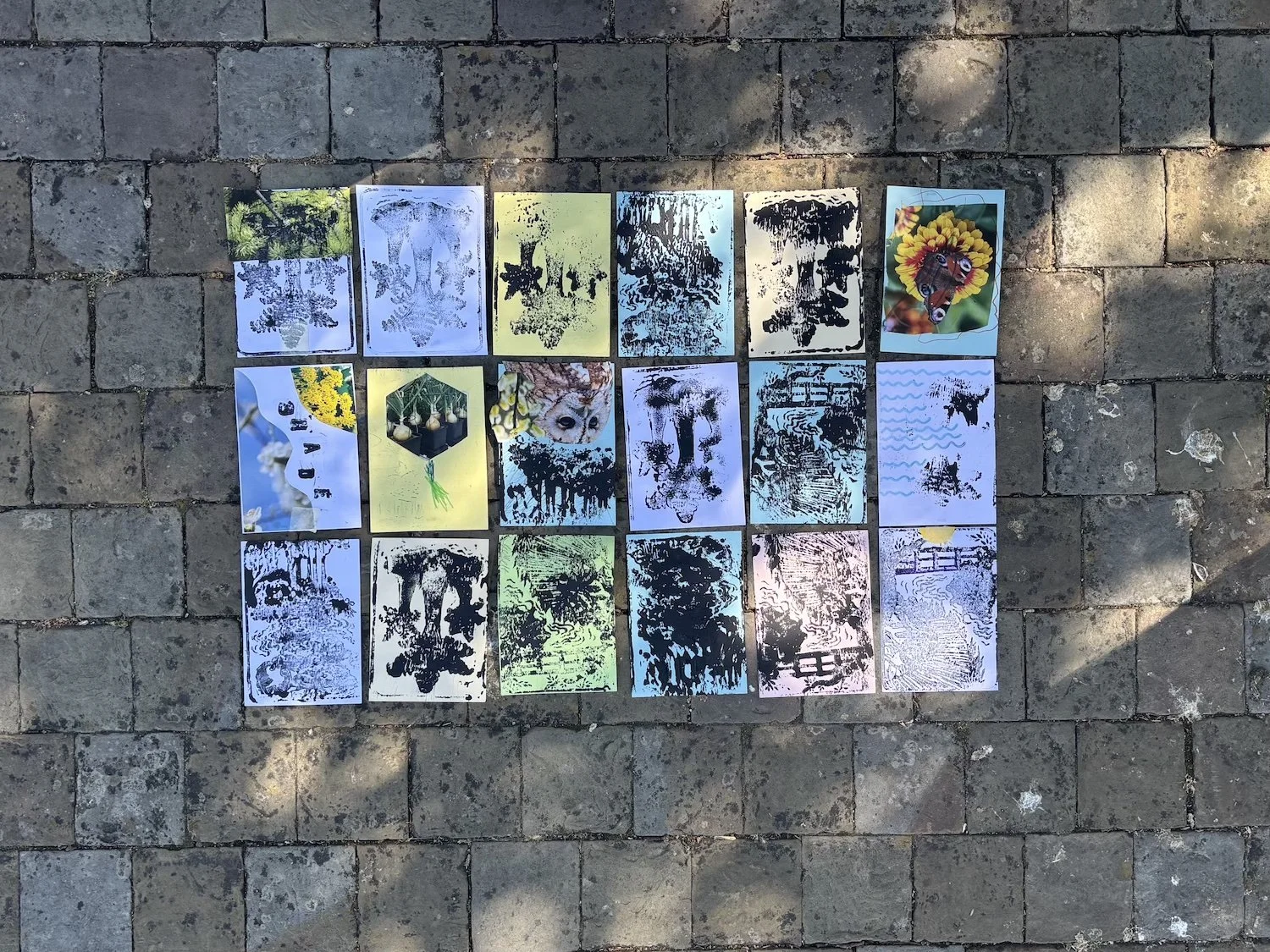
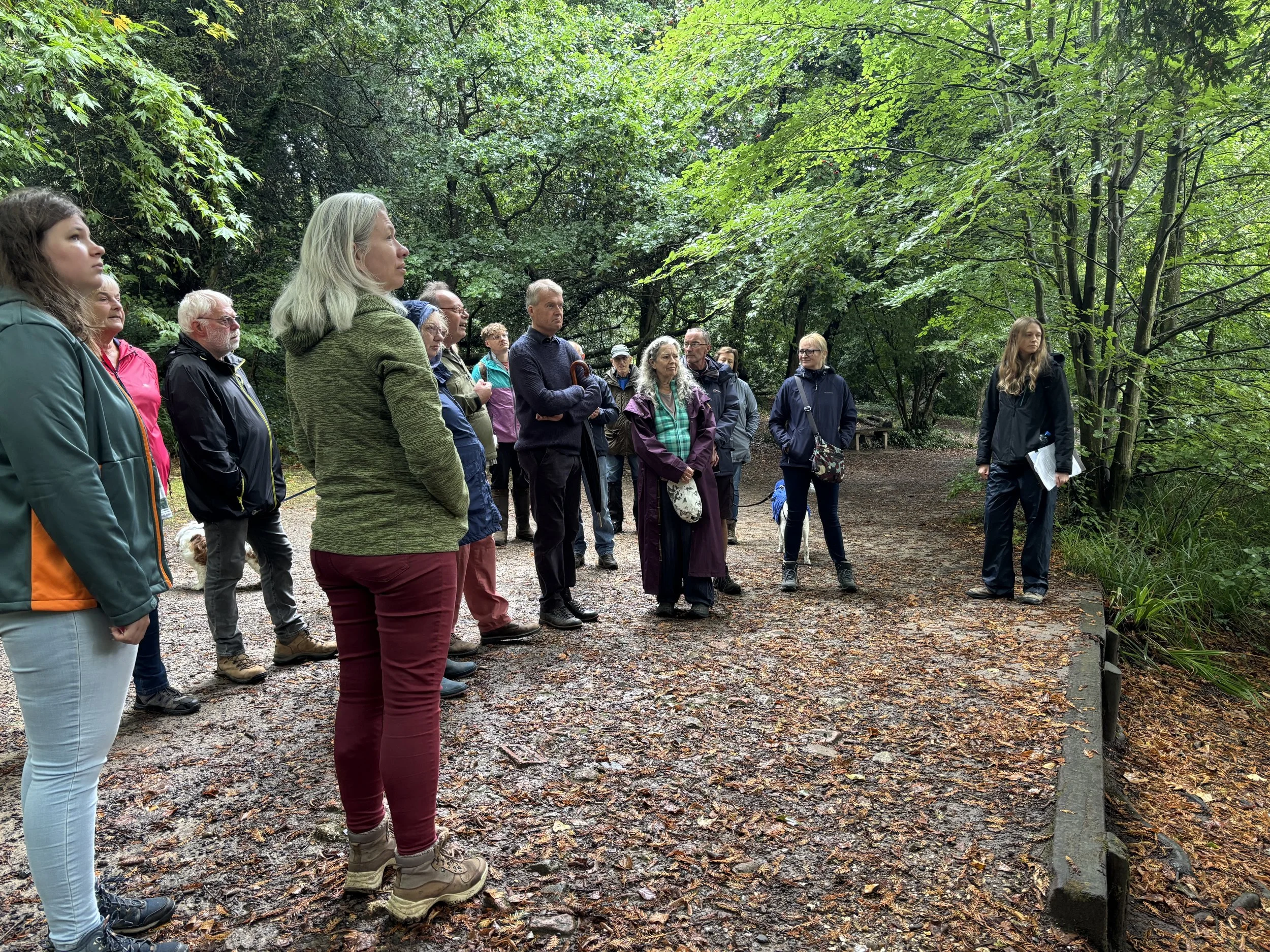
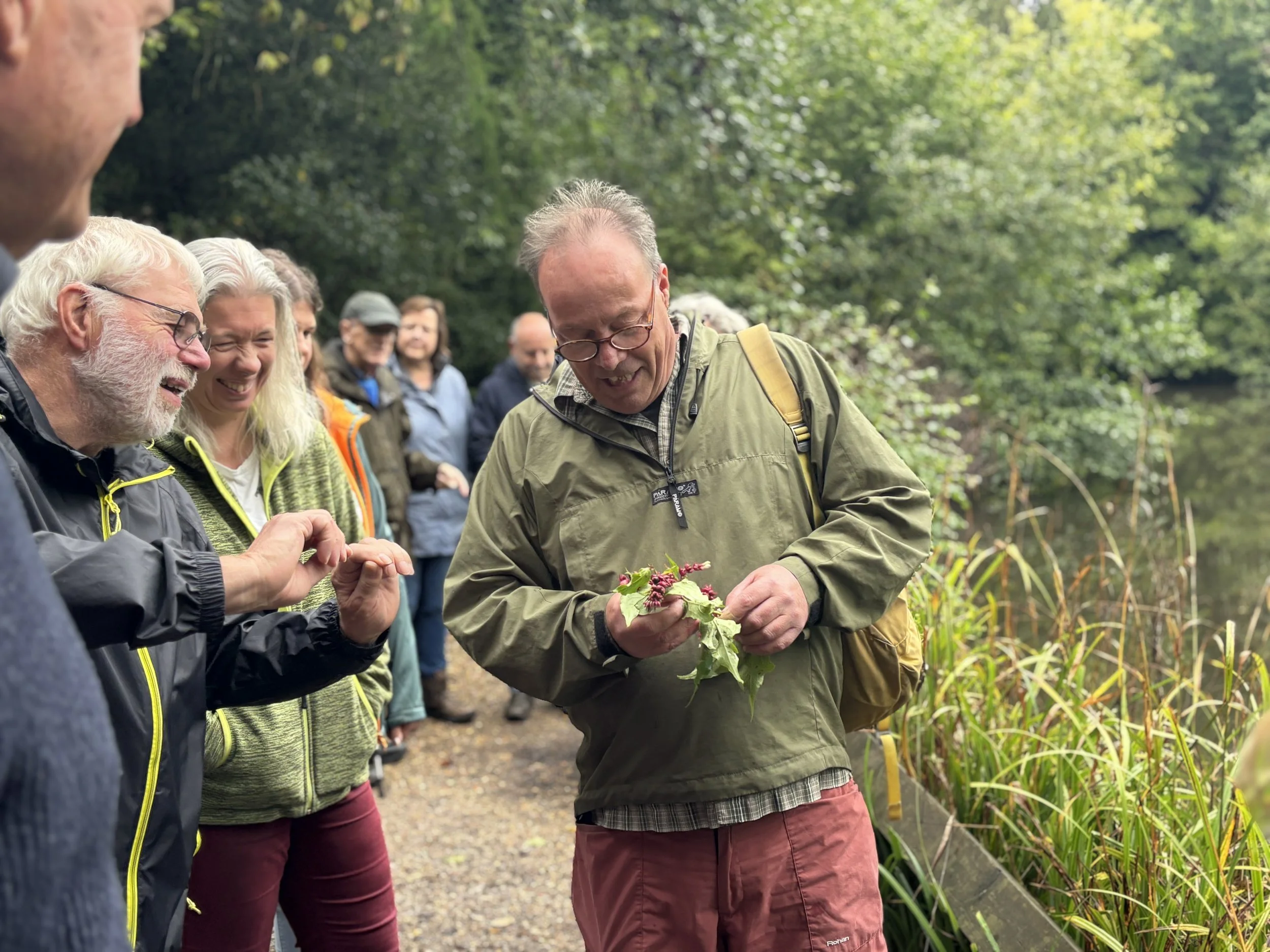
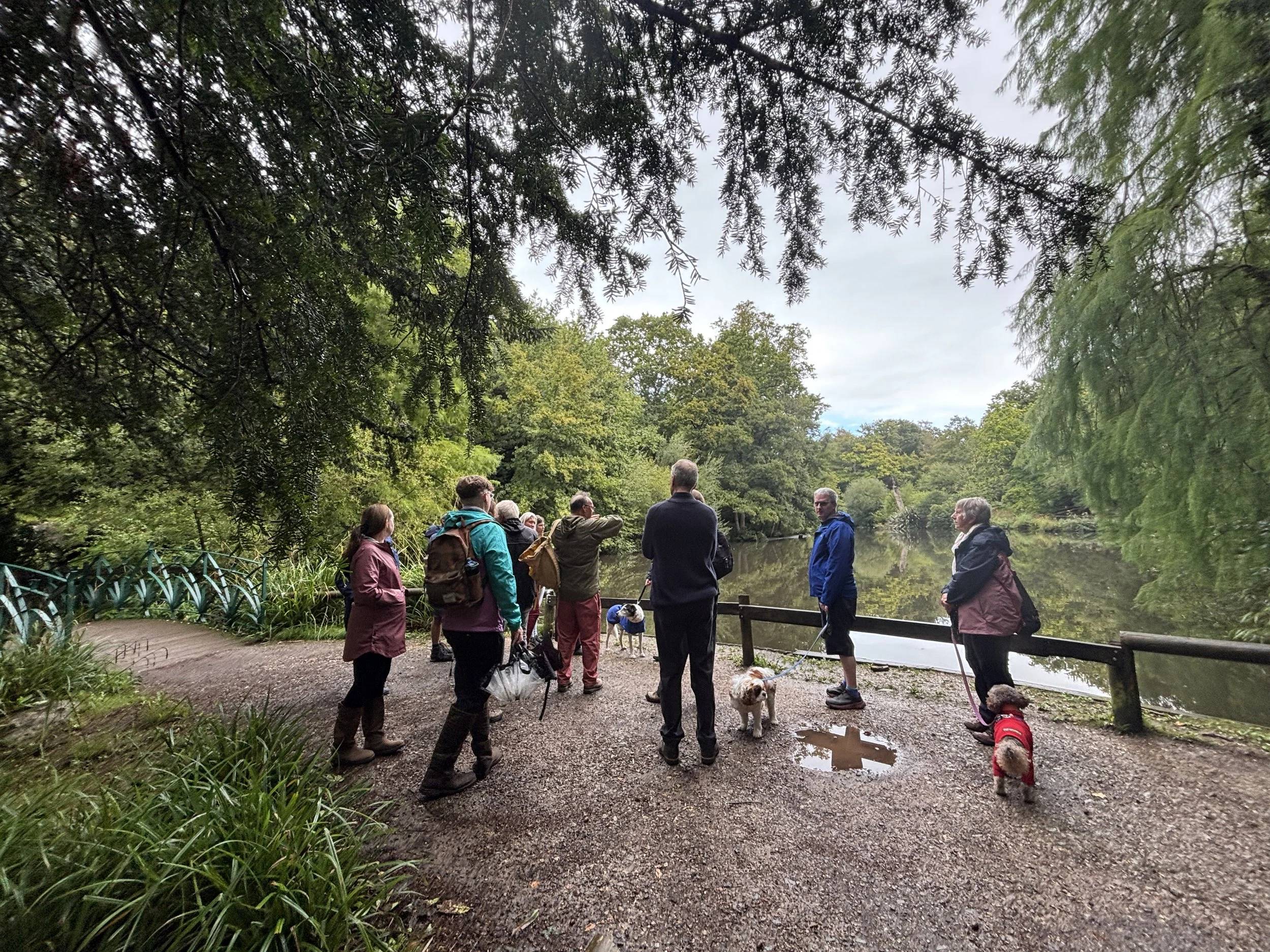
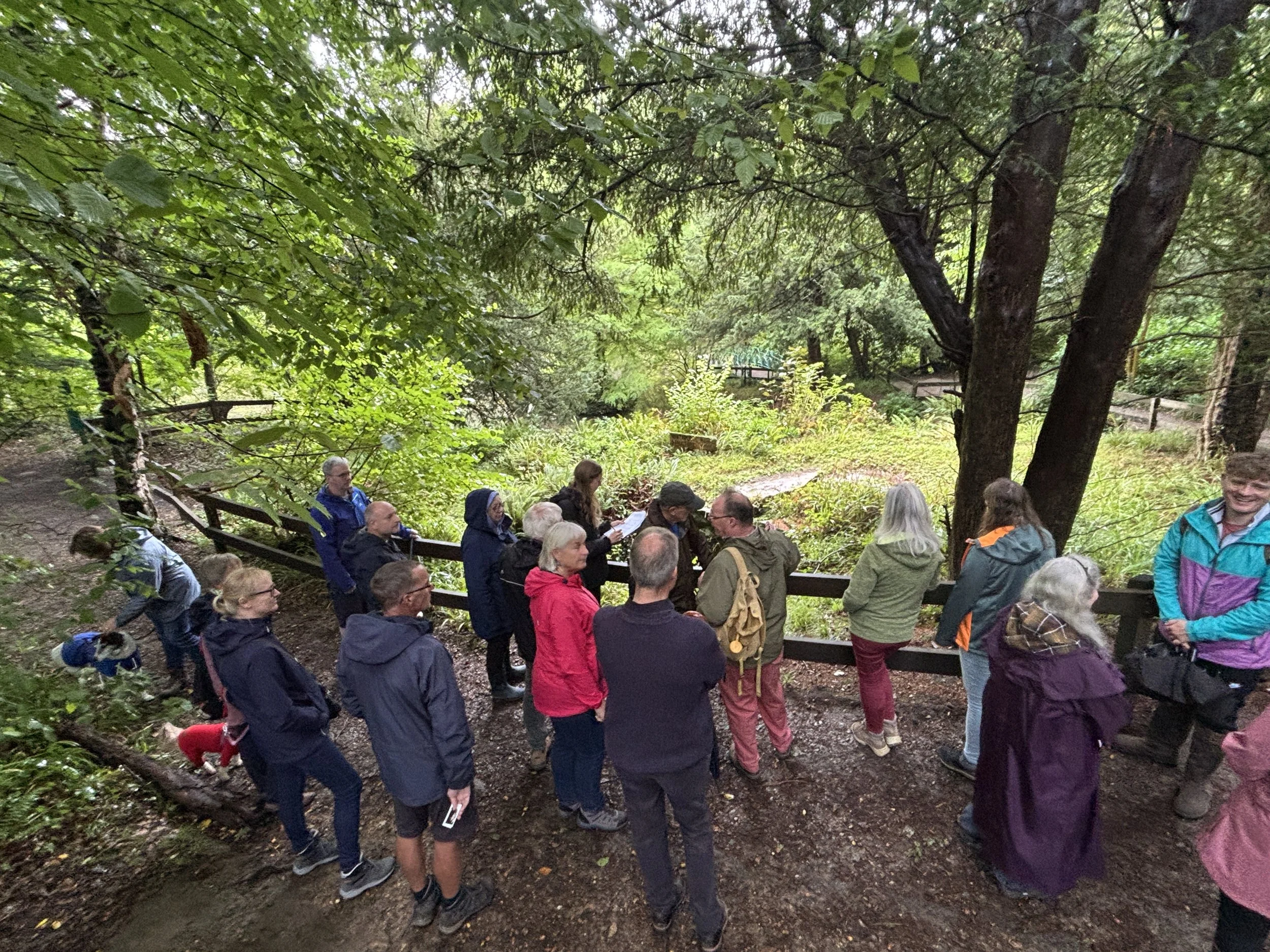
Leading on community engagement, we spent time meeting people who already use the woodland - attending events, hosting pop-ups at the park entrance and walking and talking with local groups. We also conducted interviews, ran an online survey, visited the park’s conservation volunteers, hosted a natural history walk extraordinaire and worked with people to lino-print postcards of the site’s special features.
Spanning four months, we learnt a great deal from local people that helped inform the restoration plans and future activities. But we also noticed that many voices were still missing - in particular, the experiences of people living with disabilities. Although there were design features that nodded towards inclusion, such as disabled parking, toilets and an ‘accessible route’, we didn’t meet anyone during our visits with a visible disability or mobility impairment, or anyone who spoke about experiencing the site in this way.
After a little more digging, we discovered the woodland wasn’t accessible at all. The steep inclines from the main entrance made it impossible for wheelchair users to enter, and even the ‘accessible route’ was impassable on wheels. This opened up a whole new focus for engagement: How might we involve people living with disabilities to make the site more accessible to them?
Here we go. A common response to this line of enquiry often goes something like this: “What do you expect? It’s a woodland. You can’t smooth every path or you’d lose the nature and its beauty.” And to be quite honest, I’ve grown tired of hearing this as a reasonable answer to a curious and well-placed question. So, rather than accepting this as the end of the conversation, like many do, we pushed on with curiosity to challenge the binary distinction between access and nature and ask: what might happen if both were taken seriously? How might these seemingly different needs present opportunities for collaboration?
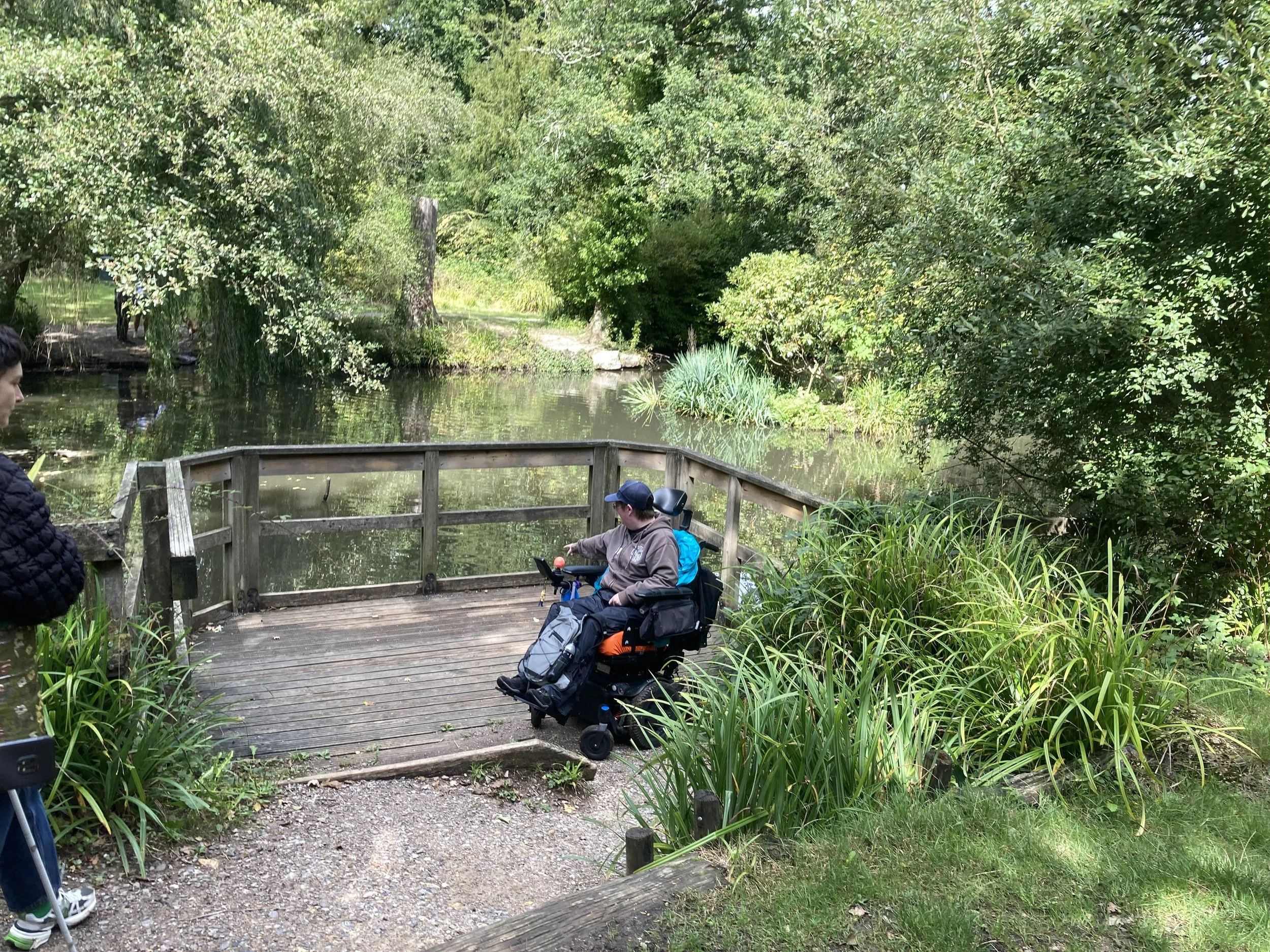
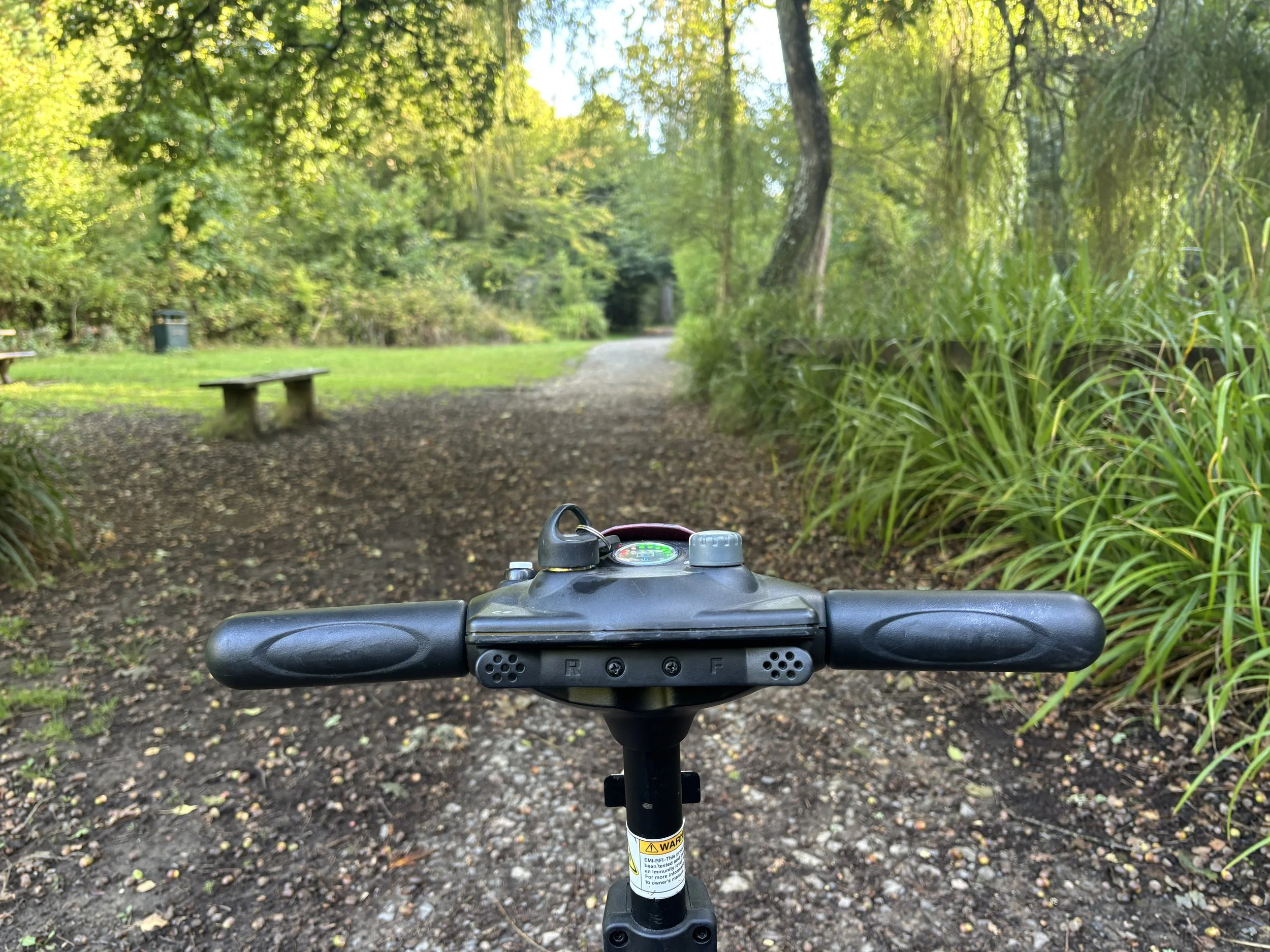
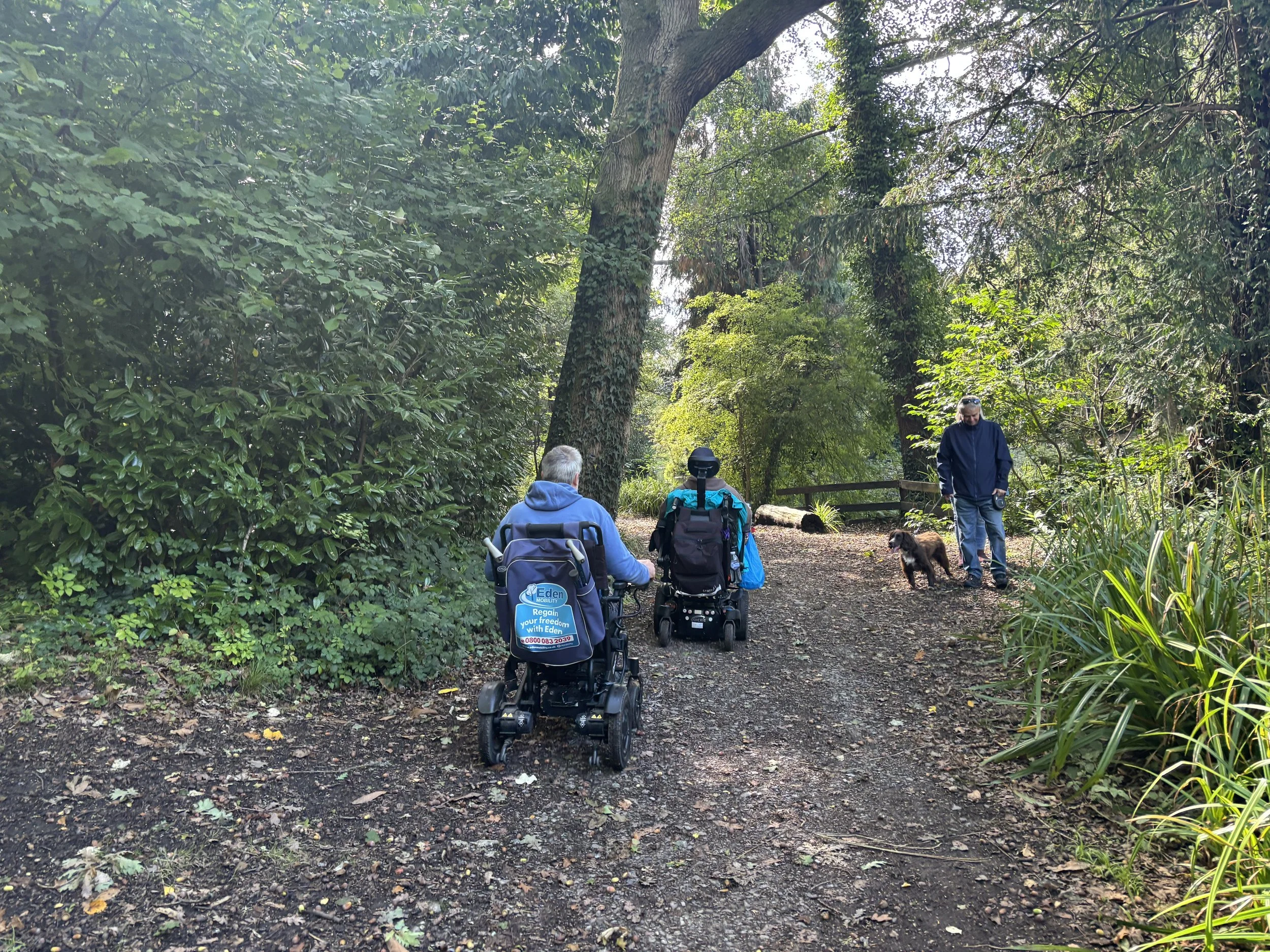
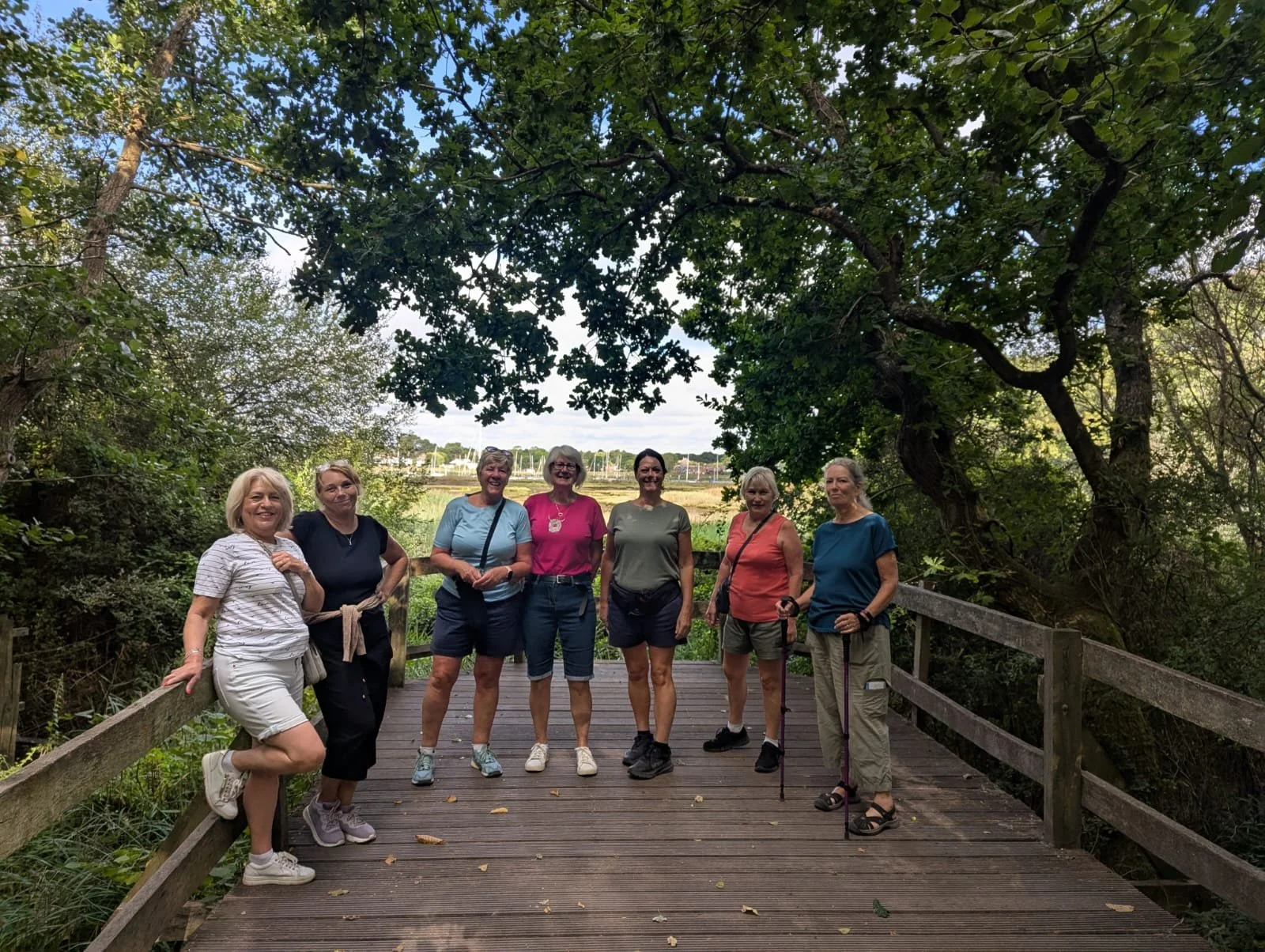
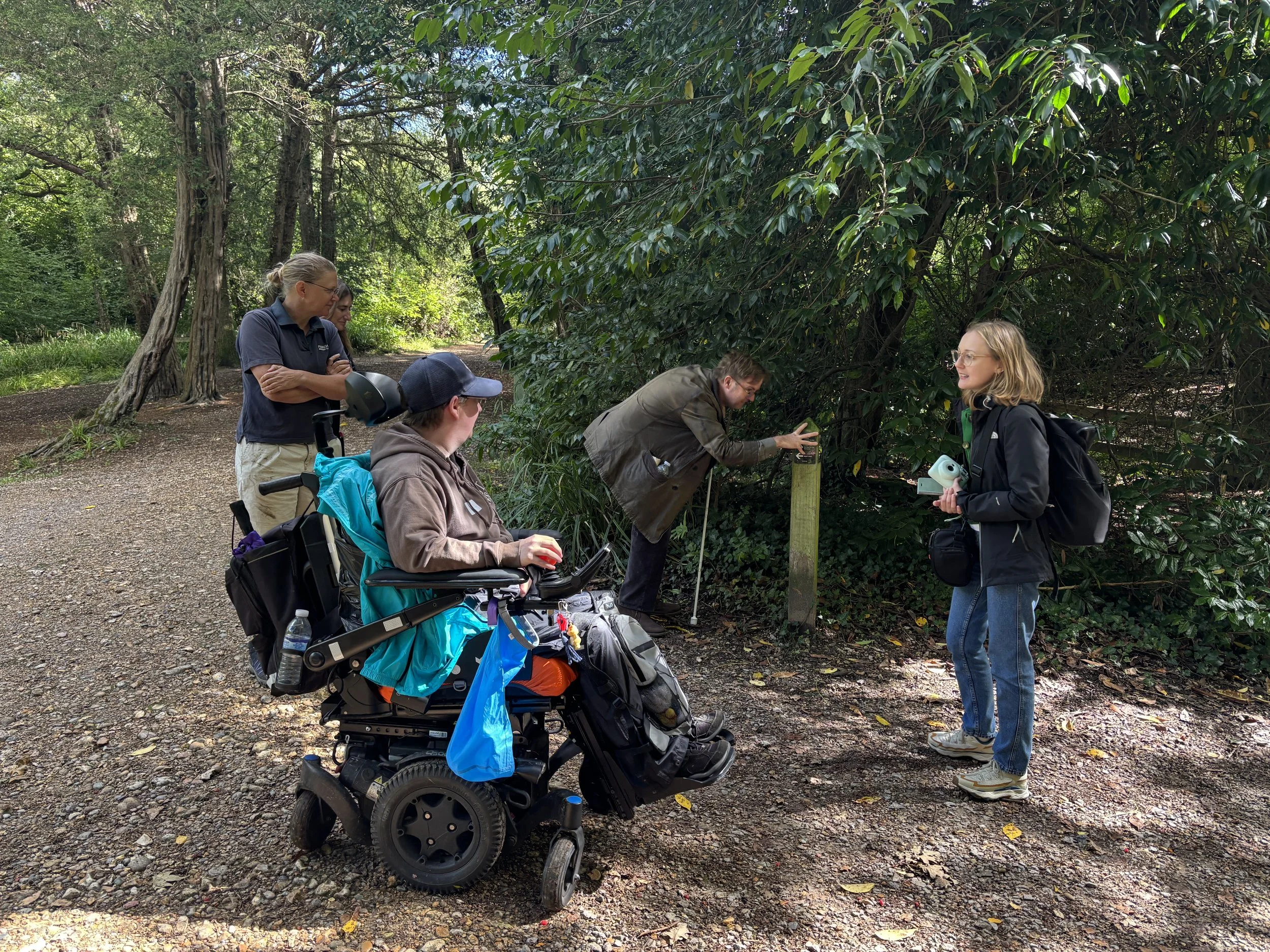
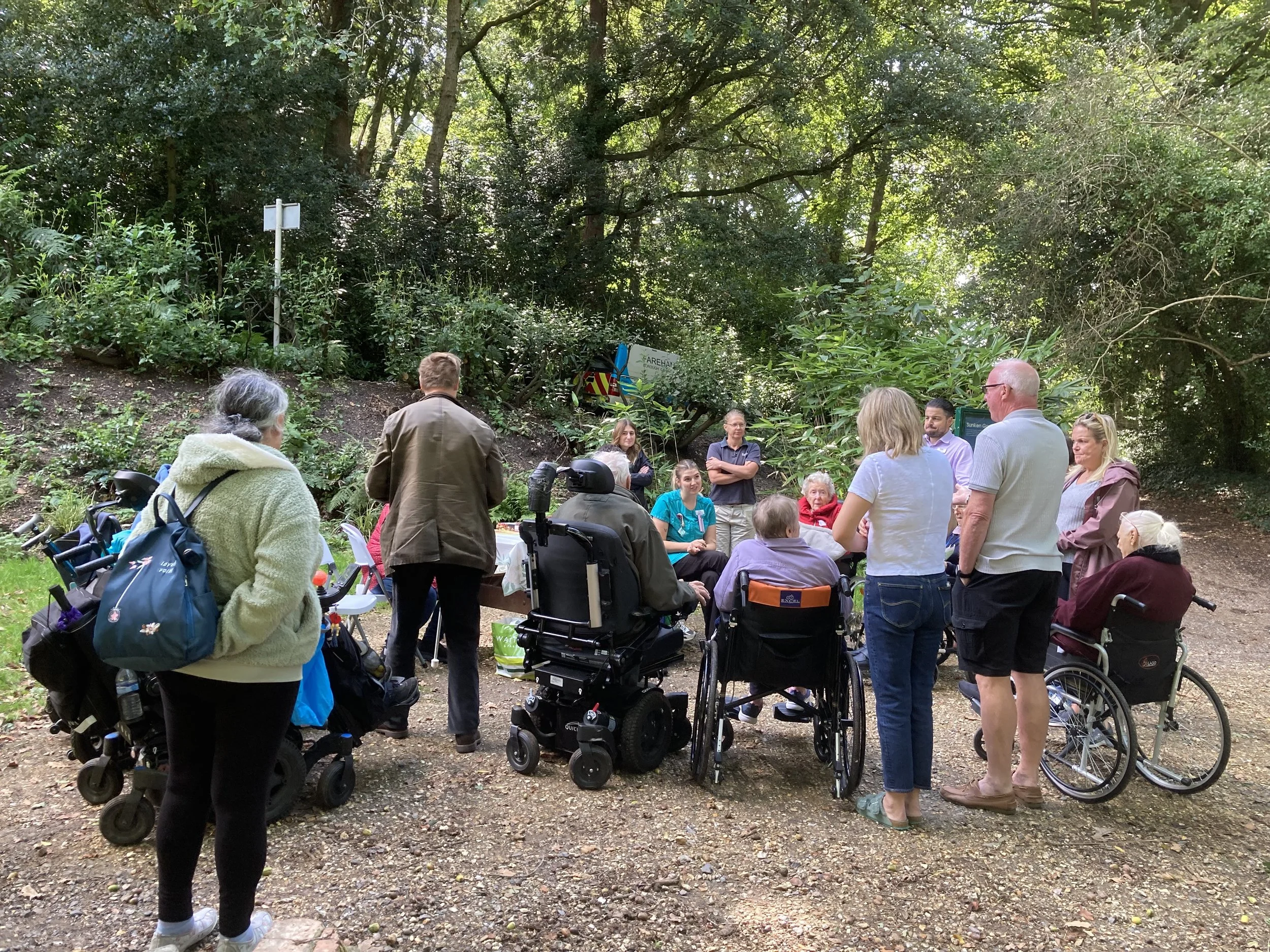
To explore this, we formed a small group of people with different lived experiences of disability and returned to the woodland together. We walked and wheeled around the site, taking photographs, noticing smells and textures, testing slopes and negotiating tree roots. We picnicked in the sunken garden, held discussions and listened carefully to one another’s experiences of the landscape.
What we heard was not a demand for perfectly smooth paths or a neat and tidy environment, but instead a desire for wildness and a sense of adventure. People described their highly attuned senses and the unique woodland experience: the rustle of leaves, the dappled sunlight, the soft sound of moving water and the cool breeze lifting from the lake.
The group did not expect every tree, bench or flower to be physically accessible to them, but they did desire for the benefits of the woodland to extend to their ways of experiencing it. In part, this would of course mean physical access via a safe route into the site, but the focus shifted away from built infrastructure towards working with the wildness of the woodland to support the sensory experience for all types of bodies.
This process shifted how we thought about the relationship between accessibility and ecology. Rather than treating them as competing priorities, we began to see them as different forms of knowledge about the landscape that could work together to form a richer design brief - prompting interventions that work not through the dampening of wildness, but through supporting it to be experienced by different bodies.
We also expanded our view of what was meant by ‘accessibility’. We discussed sense of safety, relationship to risk, confidence, access to information and resources and experiences of discrimination. We shared ideas of empowerment rather than regulation, creating design solutions that gives all individuals the information they need to make informed choices about how they might venture into Holly Hill.
Through this rich engagement, we opened up the conversation about how to design with and alongside people living with disabilities and moved a static discussion into a new phase of possibility. Designs are still in the making at Holly Hill and members of the group have since gone on to work with the council on other sites across the region, helping influence how landscapes are shaped so that more people can experience nature.